
AUDREY HEPBURN: The Art of Being Underestimated

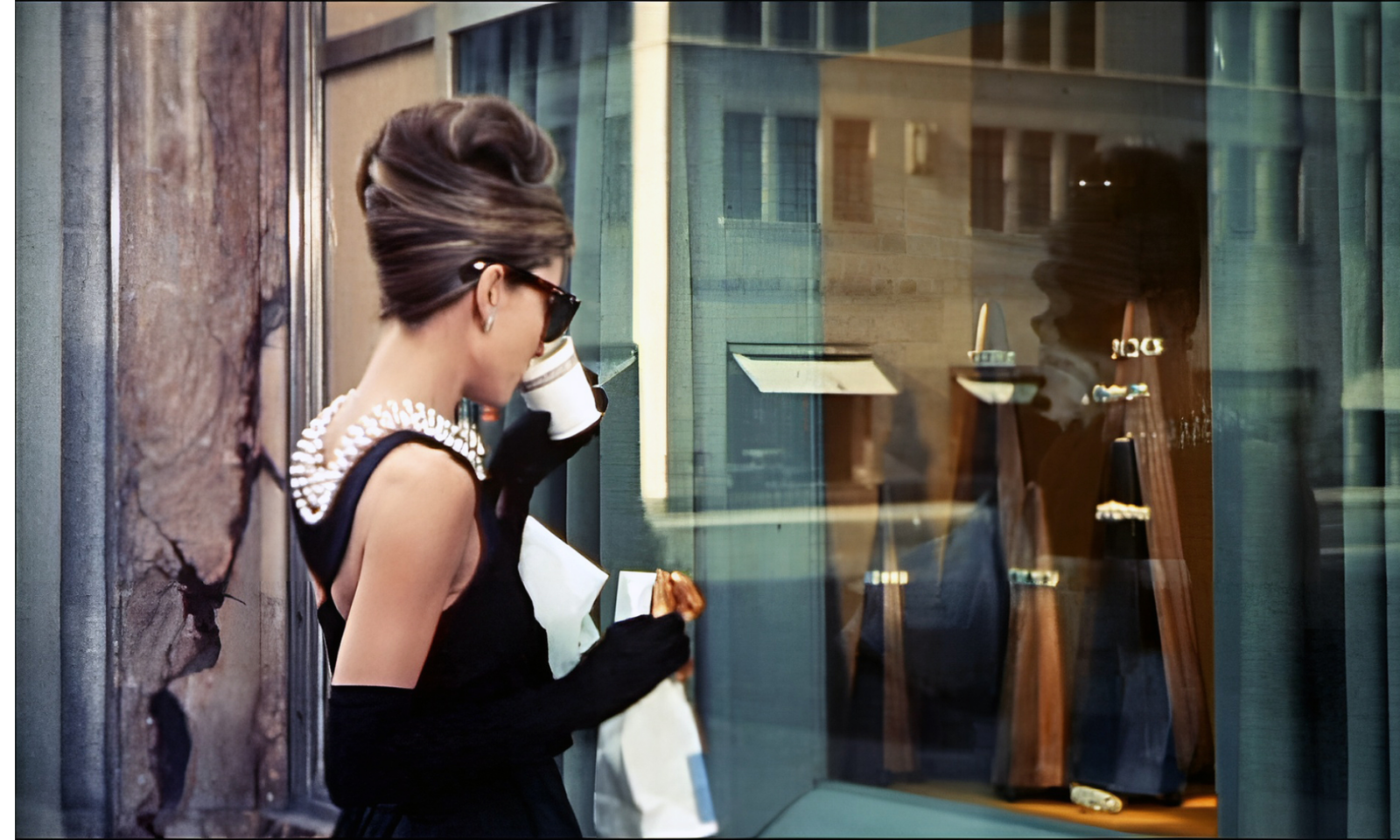

Most people think they know Audrey Hepburn.
Who they actually know is Holly Golightly — the oversized sunglasses, the little black dress, the cigarette holder, and that breathless, almost weightless laugh. The woman who drifted through a New York penthouse party as if reality had never once asked anything of her. Shallow, luminous, and unthreatening — a beautiful girl playing at adulthood with nothing serious beneath the surface.
It was the greatest performance of her career, not because Holly was difficult to play, but because Audrey already understood exactly how to be seen that way.
She had been practicing it for years.
The First Lesson
There is a form of survival most people never have to learn, the kind where being underestimated is not an injury but an advantage, a private permission slip to move through the world unnoticed in ways that keep you intact.
Audrey Kathleen Ruston learned this during her childhood in Nazi-occupied Holland. She was ten when the war arrived, seventeen when it ended, and in between those years she absorbed something that would quietly structure everything that followed: that the room is often safer when it believes it has already finished reading you.
She danced in dim cellars for the Dutch Resistance while German soldiers occupied the streets above. She carried messages hidden in her ballet slippers, delivering them with the same composed stillness that would later be mistaken for fragility. She watched her uncle executed for refusing collaboration. She survived on tulip bulbs and grass while soldiers passed her in the street, assuming she was simply another quiet, forgettable girl.
At liberation, she weighed eighty-eight pounds. Still standing, still observing, still intact in the only way that mattered — with an interior life no one had been granted access to.
 |
|
The Reinvention
After the war, she pursued ballet in Amsterdam and then London, but a body shaped by deprivation could not hold the future she had once imagined. The dream collapsed quietly, without spectacle.
So she did what women who have already outlived catastrophe tend to do; she redirected. Not with panic, but with precision. Acting became the next language, and she entered it the way she entered every space: already aware of how much to reveal, and how much to withhold.
Hollywood saw the frame — the delicacy, the enormous eyes, the almost unreal lightness — and mistook it for decoration. Something harmless and easy to categorize.
It had no idea.
Within her first two films, she earned an Academy Award. Then another nomination. Then a Tony, an Emmy, a Grammy, and a BAFTA. She worked with Wyler, Wilder, and Zinnemann, building a career not on excess but on control — the ability to inhabit exactly what was projected onto her while never surrendering what was underneath it.
Holly Golightly Was Always the Point
When Truman Capote wrote Holly Golightly, he was not inventing a woman so much as constructing a defense mechanism: breezy, unanchored, charmingly evasive, and fluent in the art of letting people mistake performance for transparency.
Audrey understood her immediately; not as fiction, but as recognition.
Both understood a shared logic: that in a world inclined to underestimate women, one of the most effective forms of power is allowing it to misread you. To appear decorative when necessary. To be legible only on the surface. And then, away from expectation, to move with complete autonomy.
Carolyn Bessette Kennedy understood this as well. Entering one of the most visible marriages in America, she responded not with expansion but with reduction — fewer gestures, fewer disclosures, fewer openings for interpretation. She was called cold for it, as if restraint were not a form of authorship over one’s own image.
Audrey understood; women who move with intention often do.
The smile is never the story. The stillness is.
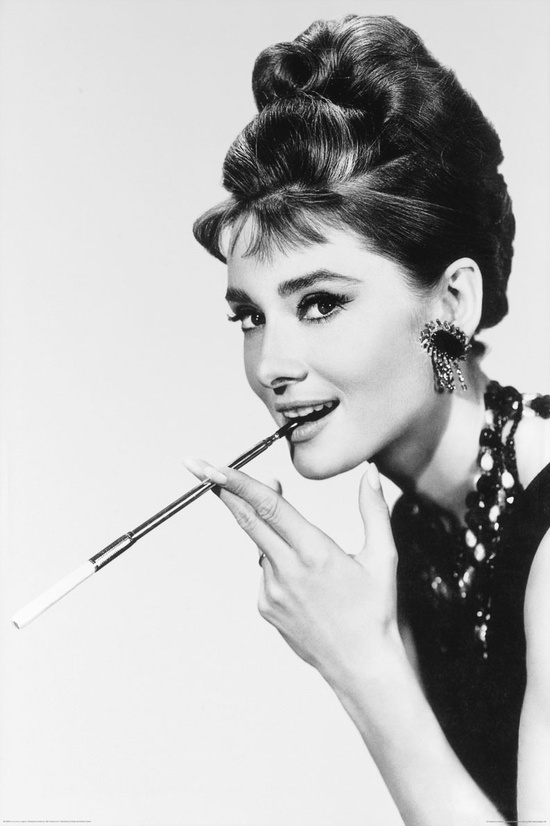
Photo: Paramount Pictures / Public domain, via Wikimedia Commons
The Aesthetic Was Always Architecture
Audrey’s style was never ornament; it was structure.
Hubert de Givenchy did not so much dress her as translate her internal grammar into fabric. What emerged — the boat neck, the capri, the sleeveless shift, the black dress that became cultural shorthand — was not fashion, but filtration. A refusal of excess in a decade that often equated femininity with accumulation.
Her silhouette was edited, not decorated. Her brows, her chignon, her matte lip — all of it functioned less as beauty language and more as boundary setting. In an era of visual saturation, she appeared almost architectural: precise, continuous, unbroken.
Even her scent — L’Interdit, created for her alone — carried its own quiet subtext. “The forbidden.” Not as provocation, but as biography.

The Work Nobody Photographed
Her humanitarian work did not arrive as branding or extension. It arrived as continuity.
With UNICEF, she traveled to Ethiopia, Sudan, Somalia, Bangladesh, El Salvador, and Guatemala, often without ceremony or framing. She did not announce presence; she entered it. She sat with children in conditions most audiences would struggle to look at, and she stayed long after attention moved elsewhere.
She once described her love for children as physically painful — not sentimentality, but recognition. A form of memory the body holds when it has known its own threshold.
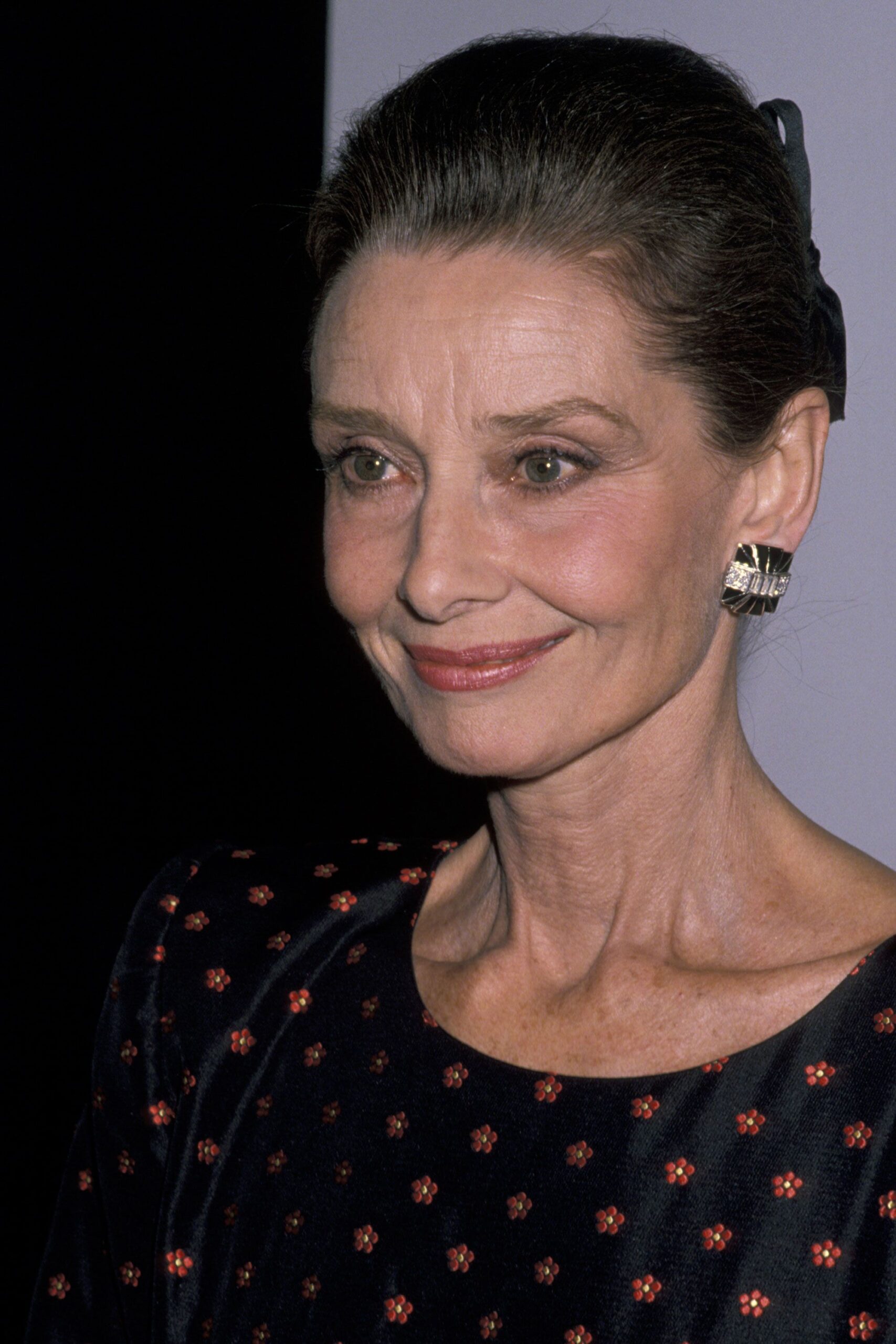
At sixty-three and ill, she walked through refugee camps in Somalia as the cancer advanced, still arriving as she always had: without performance, without commentary, without asking to be interpreted.
Holly Golightly would not have gone. But Holly was never the point of entry — only the disguise required to pass through it.
|
|
Why She Still Reads Like a Compass
In an era defined by exposure, Audrey Hepburn remains less icon than recalibration.
She understood something most cultures relearn slowly: that visibility and power are not synonymous, and that being underestimated can be a form of strategic shelter rather than absence.
She moved through roles — survivor, actress, mother, ambassador — with the same underlying logic: not self-erasure, but selective revelation. Never more than the moment required. Never less than what was real.
Reading the room, choosing what it needs, and offering only what is necessary, while keeping everything else — grief, steel, clarity, will — intact and unobserved.
The woman who understands this does not announce it.
She simply arrives.